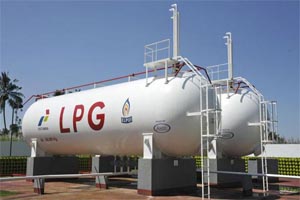
Pakistan’s Largest Private-sector LPG Producer has Resumed Operations
Pakistan’s largest private-sector LPG producer, Jamshoro Joint Ventures Limited (JJVL), has restarted operations after more than five and a half years, dispatching its first liquefied petroleum gas (LPG) shipment on Thursday. The long-awaited restart is a major milestone for the company and the country’s LPG supply chain. JJVL was the first LPG producer in Pakistan to import and utilize patented Ortloff technology that guarantees it the highest propane recovery rate in the country, which makes its facilities among the most efficient in the world. JJVL’s state-of-the-art 200mmscfd LPG extraction plant was commissioned in March 2005, and its 125mmscfd plant in October 2014.The gas-processing plants were engineered, procured, constructed, and commissioned by Houston-based Exterran (formerly The Hanover Company), which is listed on the New York Stock Exchange. Exterran also operates and maintains the plants.
|

Pakistan’s Fuel Oil Exports Hit Record High
Pakistan emerged as a net exporter of fuel oil in 2023, reflecting a shift driven by declining domestic demand and changing refinery economics. Fuel oil exports have reached record highs this year, and refiners are expected to maintain or increase shipments in 2026 as local consumption continues to shrink. Exports have surpassed 1.4 million metric tons—about 8.9 million barrels—representing a more than 16% increase from 2024. Data analysis shows 1.33 million tons exported, up from 1.11 million tons, mostly high-Sulphur fuel oil. Most exported cargoes have been directed to markets in Southeast Asia and the Middle East. This rise in supply has contributed to an already abundant Asian market, putting downward pressure on fuel oil prices. Upsurging export volumes have allowed Pakistani refineries to maintain steady operations by preventing inventory buildup. Fuel oil has become uneconomical for domestic power generation and less profitable following recent budget adjustments.
|

First Move into Offshore Exploration in March 2026
Pakistan Petroleum Limited (PPL) to drill its first offshore oil well, along Sindh’s southern coastline, in the Sirani Block near Sujawal, approximately 30 kilometers from the mainland, in March 2026, followed by reservoir evaluation, with any potential discovery expected in about three months after commencement of operations. The prospects for oil are considered strong; but the expected volume is not disclosed yet. Up to 25 wells may ultimately be drilled in the area, depending on the results. The Sirani site presents technical challenges due to marshland and tidal fluctuations, prompting extensive preparation including jetties, logistics routes, and raised access roads. The elevated well pad will support around 250 personnel during drilling. Pakistan’s first venture into offshore exploration after decades of onshore activity and the country seeks to reduce its heavy dependence on imported oil, which accounts for more than 60% of national demand.
|

First Standardized Bunkering Operations at the Karachi Port
Pakistan has launched first standardized bunkering operations at Karachi Port, advancing the country’s busiest harbor in line with international safety and operational benchmarks. The broader effort to upgrade national port services and strengthen maritime infrastructure. The regulated system is an important step for modern maritime transport, ensures safe, efficient, and environmentally compliant refueling. By implementing formal bunkering procedures, Karachi Port fills a longstanding service gap and increases competitiveness with regional fuel-supply hubs. Reliable and well-managed bunkering to attract more global shipping lines seeking consistent service standards, which in turn will increase vessel traffic, foreign exchange earnings, and job opportunities across the maritime sector. The move reinforces Pakistan’s commitment to sustainable and internationally competitive port management, supported by strict compliance with international standards. The first phase, launched with a leading global energy trader, included delivery of VLSFO by the barge Marine Ista, marking Pakistan’s largest such fuel supply to date.
|

Export to US May Fall
The United States’ new import tariffs have triggered capital outflows from India and weakened the price competitiveness of Pakistani exports. According to the report, these measures could reduce Pakistan’s shipments to the US by nearly 30%, potentially causing thousands of job losses across labor-intensive sectors. India faces similar pressure, with tariff restrictions projected to curb its exports to the US by up to 40%. The policy includes a 10% baseline tariff on all imports, alongside additional country-specific duties of 11% to 50% on South Asian economies. Given South Asia’s heavy dependence on the US market for textiles, garments, and other manufactured goods, the impact is particularly severe. For Pakistan, whose labor-intensive industries rely heavily on US demand, the tariffs could lead to annual revenue losses of as much as $490 million, further straining foreign exchange reserves and intensifying pressure on the current account balance.
|
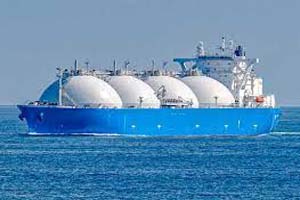
LNG Diversion Losses to RLNG Consumers
Under a recent policy change involving the Net Proceed Differential (NPD) clause, the government has decided it will no longer absorb losses from diverting LNG cargoes. Instead, these costs will be transferred to RLNG consumers, including four RLNG-based power plants, export-oriented industries, and new domestic users linked to RLNG-indexed tariffs. This shift is expected to raise RLNG prices across electricity generation, industrial activity, and household consumption. As a result, consumers may face higher RLNG-powered electricity bills, increased industrial fuel charges, and more expensive domestic RLNG connections. Under the NPD mechanism, any profit earned from selling diverted cargoes at higher international prices will go entirely to Qatar. Pakistan is currently discussing the diversion of 24–29 LNG cargoes for 2026, with Qatar set to confirm by November 30. If approved, the government estimates foreign exchange savings of $339.6 million, noting that earlier surplus RLNG could have allowed diversion of 37 cargoes in 2025.
|

Pakistan Proposes Direct Feeder Shipping Links with Malaysia
Pakistan has proposed establishing direct feeder links between ports in Pakistan and Malaysia, with extended access to Indonesia in future, objecting to lessen freight costs, reduce transit times, and strengthen maritime cooperation. The plan focuses on launching direct feeder shipping services with Malaysia to enhance connectivity and support regional trade flows. During recent discussions, both countries reviewed their existing partnership and explored new avenues for collaboration in maritime training, digital port systems, and operational efficiency. Pakistan is seeking to expand rice exports to Southeast Asia while streamlining the import of edible oil from Malaysia and Indonesia—two essential elements of its trade portfolio. For Malaysia, the initiative would reinforce its maritime training network and complement its broader logistics-integration strategy. The two governments agreed to convene technical consultations in the coming weeks to finalize an MoU, design training modules, and establish a cadet-exchange framework, with the goal of deepening long-term cooperation in the maritime sector.
|

Pakistan–Bangladesh Maritime Dialogue
Pakistan has proposed launching a Pakistan–Bangladesh Maritime Dialogue to create a regular platform for cooperation on port development, shipping links, fisheries management, maritime safety, and the blue economy. As part of its renewed outreach to Dhaka, Pakistan has again offered access for Bangladeshi cargo through the Karachi Port Trust (KPT), positioning the port’s growing capacity and improved turnaround times as key advantages for regional trade. Another proposal calls for a formal cooperation framework between the Pakistan National Shipping Corporation (PNSC) and the Bangladesh Shipping Corporation (BSC). This framework would include joint bulk and container shipping services, reciprocal port calls, technical training programs, and initiatives to support seafarer development. Both countries agreed to continue further and explore feasible steps to operationalize these proposals, reflecting a shared interest in strengthening long-term maritime collaboration.
|
|
© 2025 Alpine Marine Services Private Limited
all rights reserved
|
|
|