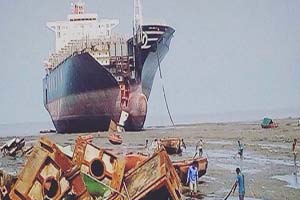
Prime Green Recycling Yard: Advancing Environmentally Responsible Ship Recycling under HKC
To emerge as a secure and sustainable maritime leader in the region, Pakistan has a strong commitment to maritime development, through continued investment and policy support by the government. Pakistan objects to forefront of safe, efficient, and environmentally responsible maritime activities. A breakthrough in the journey has been achieved with inaugurating the country’s first ship recycling facility certified under the Hong Kong International Convention (HKC). Demonstrating Pakistan’s adherence to internationally recognized environmental and safety standards, The Prime Green Recycling Yard is a safer and more environmentally compliant approach to ship recycling. The HKC certification is progress in maritime sector reforms and aligns Pakistan with global best practices. Stakeholders like The Pakistan Ship Breakers Association has a vital role in organizing and formalizing the industry, emphasizing the importance of public–private collaboration. With international sustainable practices, ship recycling has the potential to drive economic growth and strengthen Pakistan’s maritime capacity.
|

Ethanol Blending in Petrol: A Step Toward Sustainable Fuel
A government-appointed committee has recommended permitting oil refineries to voluntarily blend up to 5% ethanol with locally produced petrol, provided it is commercially viable. Led by the Ministry of Petroleum, the committee was assigned to review options for ethanol–petrol blending and has submitted its findings to the Prime Minister’s Office. Pakistan produces approximately 400,000 to 450,000 tons of ethanol annually from sugarcane crushing, most of which is exported due to more favorable international prices. Although ethanol is on average $225 per tons cheaper than petrol, its lower energy content means it must be priced 20% to 30% below petrol to make blending economical. The committee emphasized the need for investment in storage and blending infrastructure to support implementation. In terms of vehicle compatibility, newer vehicles can operate on E5 and E10 fuel blends, while older vehicles and two-wheelers are generally unsuitable. Pakistan previously tested a 10% ethanol blend through Pakistan State Oil from 2010 to 2012, but the initiative was discontinued due to limited supplies and higher export demand.
|
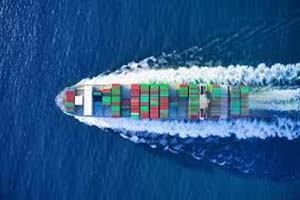
Pakistan Advances Maritime Sector with Container Ship Project
The construction of a 1,100 twenty-foot equivalent unit (TEU) container vessel for the Pakistan National Shipping Corporation (PNSC) has been initiated, taking a step toward strengthening the country’s maritime sector and reducing reliance on foreign shipping lines. The steel-cutting ceremony was held at Karachi Shipyard and Engineering Works (KSEW), highlighting the project as a strategic landmark in Pakistan’s shipbuilding industry. The initiative is the government’s commitment to revitalizing the shipping and shipbuilding sectors, aligning with broader national economic priorities and international standards. Showing Pakistan’s growing capabilities in ship constructions, vessel is being built using local expertise and resources. Developing such local infrastructure led to enhance maritime capacity, reduce dependence on foreign carriers, and support the country’s trade efficiency, as nearly 95% of Pakistan’s trade volume is transported by sea. Strengthening the maritime sector is essential for economic growth, trade security, and long-term industrial development.
|
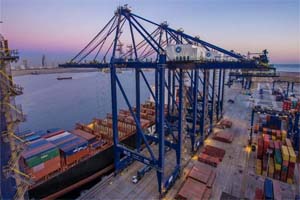
Karachi Port Enhances Logistics with Dedicated Truck Parking
To reduce congestion, improve cargo flow, and ease urban traffic around Karachi Port, the Maritime Minister has announced a 50-acre truck parking facility. The federal government has settled to allocate land for the project in principle truck parking facilities, addressing the chronic shortage of designated parking for heavy vehicles operating at and near the port. Currently, on a daily basis thousands of trucks queue present on major city roads, leading to prolonged traffic jams, delays in cargo handling, higher operating costs, and logistical inefficiencies. This disrupts trade activity and also inconveniences commuters, with increases environmental pollution, while raising road safety concerns, especially during peak port operations. Congestion as a critical bottleneck, affecting both port efficiency and urban mobility. By developing dedicated parking and enhancing traffic management, the government aims to strengthen port-linked infrastructure, facilitate smoother maritime trade, and promote economic growth, while simultaneously improving the quality of life for Karachi residents.
|

Sugar Deregulation: Economic and Social Risks
Pakistan’s intentions to thoroughly deregulate sugar sector, ending decades of state control. Experts address that without strong oversight, granting market freedom could exacerbate longstanding issues rather than resolving them. A latest policy report proposes the need for institutional safeguards and emphasizes gradual, carefully monitored deregulation framework. Pakistan produces 6 –7 million tons of sugar annually, while domestic consumption ranges from 5.5–6 million tons. Regardless of this balance, the sugar sector has encountered numerous price spikes, shortages, and controversial export decisions, leading losses for consumers and the government. Problems such as cartelization, weak stock reporting, delayed payments to farmers, and politically influenced trade decisions have diminished market trust. Focusing the farmers rights protection it is suggested a national digital stock monitoring system to track production and real time inventories, implementing rule-based trade decisions to keep transparent data, and to avoid powerful players exploit markets gaps leading to risk to small farmers and mills.
|

Reforming Wheat Procurement: Private Sector Participation Planned
The provincial governments are now expected to independently procure wheat, with all provinces providing details of their available stocks and corresponding disposal plans. Strategic wheat reserves for 2025–26 production will be established by the provinces, and private companies will be engaged in procuring wheat for these reserves, as reported to the National Wheat Oversight Committee. Previously, the Pakistan Agricultural Storage and Services Corporation (PASSCO) was the sole public-sector entity responsible for strategic wheat procurement. The revised policy is designed to ensure food security while stabilizing wheat prices, aiming to protect farmers from market volatility. It emphasizes transparency, encourages private-sector participation, and strengthens coordination between the federation and provinces. Provincial implementation units have been set up to operationalize the interim national wheat policy effectively. Once fully implemented, this framework is expected to create a sustainable and balanced wheat market, benefiting farmers, consumers, and the overall national economy while reinforcing the country’s food security.
|

Opportunities in Pakistan’s Blue Economy Explored by Arif Habib
Pakistan’s blue economy and the National Shipping Corporation (PNSC) under the sight of Arif Habib, indicating the intentions to tap underdeveloped maritime potential of Pakistan. The currently working PNSC management has invited for discussions about the corporation in future. The sustainable commercial utilization of ocean resources is a largely untapped frontier for Pakistan. Currently, an estimation in the sector contributes less than 0.5 percent to the national GDP, while leaving the potential of over USD100 billion.
|

Upgrading Port Qasim into a Climate-resilient Industrial Estate
Pakistan’s Ministry of Maritime Affairs has announced plans to transform Port Qasim into a climate-resilient industrial complex aimed at generating employment, attracting investment, and promoting sustainable economic growth. Handling nearly 51 percent of Pakistan’s maritime trade, Port Qasim has a critical role in facilitating the country’s trade, including links with Central Asian states. Under the proposed plan, the port will be developed into a global industrial and logistics hub, serving as a key gateway for Pakistan’s national economy. More than 14,000 acres have been allocated for the development project. The industrial complex will be organized into three dedicated zones: an eastern zone for heavy industries and export-oriented units, a northwestern zone for value-added industries and port-related services, and a southwestern zone for special industrial and commercial activities. At present, 833 industrial units are operational at Port Qasim, while 40 more are under construction. The initiative is part of Pakistan’s broader effort to modernize port infrastructure and enhance road and rail connectivity to overcome prolonged macroeconomic challenges.
|
|
© 2026 Alpine Marine Services Private Limited
all rights reserved
|
|
|