
Government Implements Measures to Regulate Furnace Oil Exports
In response to emerging supply uncertainties amid the ongoing geopolitical conflict, the government has strengthened oversight of furnace oil exports to safeguard domestic energy security. Under the revised directive, oil refineries are now required to obtain prior approval from the Prime Minister’s Committee on the Monitoring of Petroleum Prices before exporting furnace oil. The measure aims to ensure prudent management of national fuel resources during a period of heightened global market volatility. The international oil market has experienced significant fluctuations following disruptions to shipping routes through the strategically vital Strait of Hormuz, a corridor through which nearly 20 percent of global oil supplies transit. Even short-term disruptions in this passage can lead to supply delays, increased freight costs, elevated risk premiums, and sharp price movements, particularly for import-dependent Asian economies with limited alternative sourcing options. Given Pakistan’s reliance on Gulf-origin energy imports, authorities are closely monitoring developments as freight rates and global benchmark prices continue to rise.
|
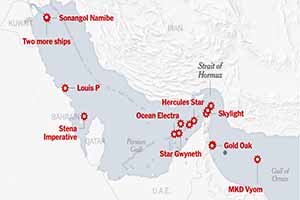
Security Risks in Key Sea Routes Disrupt International Cargo Movements
Amid progressively deteriorating security conditions across the Gulf and key maritime routes linking the Middle East, Red Sea, and Eastern Mediterranean, several global shipping lines have suspended new cargo bookings for the region. The development has triggered significant disruption for Pakistan’s trade and logistics sector, with cargo loading operations at major terminals in Karachi coming to a halt, creating uncertainty for importers, exporters, and supply chain stakeholders. Leading international carriers have issued formal advisories pausing bookings for ports across the Middle East, including the United Arab Emirates, Saudi Arabia, Bahrain, Iraq, Kuwait, Oman, and Qatar. These measures extend across a substantial portion of the region’s commercial maritime corridor and have been accompanied by immediate operational restrictions at affected ports. As a result, terminals such as Karachi Gateway Terminal Limited and Qasim International Container Terminal are currently limited to discharging inbound cargo, while outbound loading operations remain suspended. Shipping companies are closely monitoring developments and reviewing contingency plans as they await improvements in the regional security environment.
|
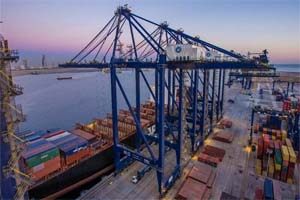
Karachi Port Expands Role in Regional Cargo Redistribution
Karachi Port is experiencing a steady rise in transshipment cargo activity as international shipping lines increasingly rely on its facilities for cargo redistribution across Middle Eastern trade routes. The growing volumes are reinforcing the port position as a strategic maritime logistics hub supporting regional container movement and supply chain connectivity. In a recent development, two transshipment vessels berthed simultaneously at the port, reflecting its expanding operational role. CGLA Ocean Breeze 1 docked at Karachi International Container Terminal (KICT), while GFS Jade berthed at Karachi Gateway Terminal Limited (KGTL). Both vessels discharged containers designated for onward shipment to multiple ports across the Middle East. The concurrent handling of transshipment cargo underscores Karachi Port’s operational efficiency, modern infrastructure, and geographic advantage in facilitating regional maritime trade. It also highlights the port’s ability to maintain the flow of international commerce amid ongoing disruptions affecting global shipping routes. As transshipment volumes continue to grow, Karachi Port is further consolidating its role in regional shipping and maritime connectivity.
|
New Maritime Feeder Route Strengthens Karachi-UAE Trade
Karachi Port Trust (KPT) has announced the launch of a dedicated feeder service connecting Karachi Gateway Terminal (Private) Limited (KGTL) with the UAE ports of Fujairah and Khor Fakkan. This strategic initiative enhances maritime connectivity and reinforces KGTL’s role as a key hub for Pakistan’s trading community. Cargo routed through Fujairah and Khor Fakkan will benefit from seamless integration with regional and global shipping networks, leveraging the UAE’s advanced logistics infrastructure. Containers can be efficiently moved via integrated road and rail corridors to major commercial and logistics centers across the UAE, ensuring smooth transshipment and timely delivery. The new feeder service strengthens supply chain continuity, enabling Pakistani importers and exporters to maintain reliable access to international markets amid evolving regional shipping dynamics. The service called at KGTL, operated under AD Ports Group’s international arm, Noatum Ports, with the inaugural vessel arrived on the evening of March 11, officially marking the commencement of regular operations.
|

Petroleum Price Hikes in Pakistan
Pakistan has recently witnessed one of the most significant increases in petroleum prices in recent years, with petrol and diesel prices rising by approximately Rs55 per liter. The current adjustment comes in response to the surge in global crude oil prices driven by escalating geopolitical tensions in the region. An important factor behind the increase is the disruption of supply routes through the Strait of Hormuz, a critical passage responsible for nearly 20% of the world’s oil trade. Ongoing unrest has also affected oil infrastructure, export terminals, and production facilities across the Gulf, resulting in supply constraints and heightened volatility in global energy markets. As Pakistan relies heavily on imported oil to meet its energy needs, fluctuations in international oil prices have a direct impact on domestic fuel costs. Consequently, the government has been compelled to pass on the increased import costs to consumers, leading to a substantial rise in fuel prices and contributing to broader inflationary pressures across the economy.
|

Qatar Shows Interest in Increasing Rice Imports from Pakistan
In a virtual meeting of Pakistan’s Federal Ministry of Commerce with the state minister for Foreign Trade Affairs of Qatar to explore avenues for strengthening bilateral economic cooperation. Discussions to focused on enhancing and strengthening collaboration in food security coordination, food supply chains, and investment opportunities in Pakistan, particularly across infrastructure, logistics, and the energy sector. Strategic initiatives, including the expansion of Karachi Port, were highlighted as promising areas for potential Qatari investment. Both sides expressed satisfaction with the positive trajectory of Pakistan–Qatar relations and reaffirmed their commitment to expanding economic engagement. Emphasis was placed on encouraging stronger interaction between the business communities of both countries to further deepen trade and commercial partnerships. A key area of discussion is the potential to increase Pakistan’s exports of rice and other food products to Qatar. Recognizing rice as an essential component of Qatar’s national food security strategy, the Qatari side conveyed interest in expanding imports from Pakistan. Pakistan also outlined measures to ensure exporters remain competitive and responsive to evolving market requirements.
|

Pakistan Secures Saudi Support to Stabilize Oil Supplies and Manage Price Shocks
Pakistan is working closely with Saudi Arabia to secure oil supplies and mitigate the impact of potential global price shocks following the recent record increase in domestic fuel prices. The move comes amid continued disruptions to key regional energy routes that have intensified volatility in international oil markets. As part of these efforts, the Government of Pakistan has coordinated with Saudi authorities to arrange crude shipments from the Red Sea port of Yanbu. The initiative forms part of a broader strategy to stabilize energy supplies while geopolitical tensions in the Middle East continue to affect global markets. Concern surrounds the Strait of Hormuz, a critical corridor through which nearly one-fifth of the world’s oil supply passes. Ongoing disruptions in the region have driven crude prices upward and heightened fears of global supply shortages. Saudi authorities have arranged vessels, including a larger carrier, to support Pakistan’s supply needs. Pakistan is exploring the option of docking the vessel in Oman and transferring the cargo to smaller ships, though insurance limitations are currently posing logistical challenges.
|

Alternative Supply Mechanisms for Fertilizers
Pakistan’s government has reaffirmed to safeguard agricultural inputs by introducing alternative supply mechanisms designed to ensure fertilizers reach farmers under all circumstances. Authorities are closely supervising market conditions to prevent any undue financial pressure on growers while maintaining stable availability. Amid a challenging regional landscape, the current demand–supply dynamics for urea and DAP, following a comprehensive assessment by the Ministry of National Food Security and Research confirmed that national food security and farm productivity remain protected despite external pressures. All fertilizer production facilities across the country are operating at full capacity, supported by uninterrupted gas supplies that enable consistent output. The DAP manufacturing plant is also fully functional. Meanwhile, logistics networks continue to perform efficiently, with contingency frameworks established to address potential disruptions. Authorities have further stressed the need for vigilant price monitoring at local and provincial levels to deter hoarding and prevent artificial shortages, thereby preserving affordability for farmers. Strategic initiatives, close coordination among all stakeholders are taken to strengthen local manufacturing with seamless supply chains and a gradual decrease on dependence on imports. Through proactive steps, the government aims to stabilize the fertilizer market and ensure farmers’ requirements are consistently met both immediately and over the long term.
|
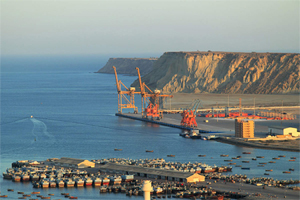
Leverage the Potential of Gwadar Port
Amid ongoing disruptions to regional maritime corridors arising from the conflict in the region, stakeholders have urged the government to leverage the potential of Gwadar Port. Representatives from leading shipping lines operating in Pakistan, alongside officials from port authorities, the Pakistan National Shipping Corporation and the National Logistics Corporation, convened to evaluate opportunities to strengthen the country’s maritime positioning. The timely and strategic utilization of Gwadar highlights its secure environment and favorable geographic location. Proactively promoting Gwadar’s available infrastructure and handling capacity to international carriers and authorities were encouraged to enhance competitiveness across other national ports through cost rationalization, improved operational efficiency, and reduced vessel and cargo turnaround times. These attributes position the port as an appealing alternative for global shipping operators encountering instability along traditional regional routes.
|
Digital National Cargo Tracking System with an e-Bilty to Facilitate Legitimate Trade
The Federal Board of Revenue has initiated the design phase of a Digital National Cargo Tracking System (CTS) alongside an electronic transport waybill, or e-Bilty, to curb smuggling, eliminate fake invoices, and facilitate legitimate trade. To advance the initiative, the FBR has engaged a South Korean technology firm to conduct a strategic feasibility assessment and develop the system design within six months. The project is financed by the World Bank under the Pakistan Raises Revenue Program and implemented by the National Targeting Centre. The platform will replace the traditional paper-based Bilty with a centralized digital waybill enabling real-time cargo monitoring from origin to destination. Each vehicle will receive a unique identification code linked to details of shipment, only accessible to enforcement authorities. A compliance framework led to the introduction of green and yellow channels, allowing trusted operators to move faster while enabling targeted inspections where required. Integrated with systems including WeBOC and STRIVE, the initiative is a step to strengthen transparency, reduce tax evasion, and support a more efficient trading environment.
|
Pak – Tajik New International Land Corridor via Gilgit
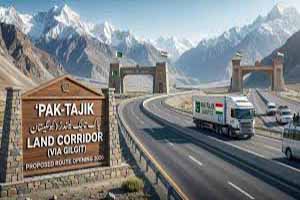
Pakistan and Tajikistan have proposed a new international land corridor via Gilgit to bolster economic ties between the two states. The need for adapting to evolving regional dynamics through effective strategies is important. The development was revealed recently. on enhancing bilateral relations, regional land connectivity and trade cooperation. move to bolster economic ties, a proposal was presented to establish a direct land corridor from Pakistan to Tajikistan via Gilgit. The Tajik ambassador was informed that Pakistan was considering special concessional tariffs to Central Asian states to expand the volume of bilateral trade.
|
Crude Oil Transportation Through the Red Sea
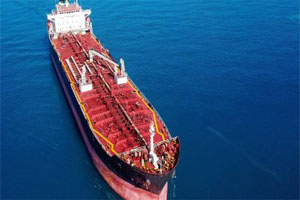
Amid escalating disruptions to maritime traffic following the closure of the Strait of Hormuz, Pakistan has initiated alternative crude oil transportation through the Red Sea corridor to sustain energy supply chains. The narrow Gulf passage, a critical global transit route, has witnessed a sharp decline in shipping activity due to the ongoing conflict in the Middle East. A tanker operated by the Pakistan National Shipping Corporation has reached Yanbu and departed for Karachi carrying approximately 73,000 tons of crude oil. Simultaneously, four petrol-laden vessels have successfully docked at Port Qasim, reinforcing domestic fuel availability. However, the ongoing regional situation has left two additional PNSC vessels temporarily delayed near Karachi and at a chartered port. The evolving crisis continues to impact energy logistics through the Strait of Hormuz, a maritime corridor responsible for transporting nearly one-fifth of the world’s crude oil and liquefied natural gas supplies.
|
|
© 2026 Alpine Marine Services Private Limited
all rights reserved
|
|
|