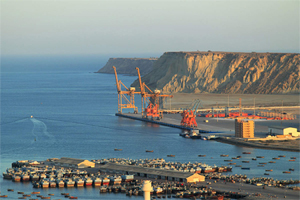
Deep-Draft Operations Signal Gwadar’s Entry into High-Capacity Trade Handling
The Federal Ministry for Maritime Affairs has publicized that with the efficacious berthing of a deep-draft cargo vessel MV BI JIA SHAN, and handling of over 53,000 metric tons at Gwadar Port, an operational milestone has been attained stressing the port’s intensifying role as a regional transshipment hub. According to an official statement, the vessel MV BI JIA SHAN, under the command of Captain Li Han, arriving from Hong Kong/China, safely berthed at Gwadar on May 24, 2026, indicating the capability of Gwadar’s deep-sea navigation channel and modern port infrastructure. Having a substantial 12.8-metre draft of the vessel, it was a noteworthy operation. It has carried prime steel billets, totaling around 20,669 pieces with a weight of approximately 53,277.42 metric tons. Originally, the vessel MV BI JIA SHAN, was bound for Port Sohar in Oman after departed from Bayuquan Port in China, but for transshipment the vessel was rerouted to Gwadar. The reroute to Gwadar port imitates growing confidence among international shipping lines in Gwadar port’s operational readiness and strategic location. Handling such large vessels fortifies Gwadar Port’s position in smoothing trade connectivity between China, the Middle East, landlocked Central Asia, and other regional markets. The consistent arrival and efficient management of deep-sea vessels underscore the port’s rising competitiveness as an integrated global trade hub with maintaining safe, efficient, and cost-effective operations while enhancing Pakistan’s role in regional and international trade networks.
|

$7 Billion B2B Agreements Mark New Phase in Pakistan–China Cooperation
Marking an advancement in bilateral economic cooperation, investment agreements and memorandums exceeding $7 billion were signed between Pakistani and Chinese companies during the Prime Minister of Pakistan’s recent visit to China. Intended at strengthening collaboration across several key sectors including information technology, renewable energy, agriculture, manufacturing, and artificial intelligence, agreements were concluded at the Pakistan–China Business-to-Business Investment Conference in Hangzhou. Particularly, a $1.12 billion fertilizer production agreement was signed between Haolu Engineering & Technology Company and Fauji Fertilizer, additionally, a $100 million agreement covers agricultural machinery, agrochemicals, and the establishment of a regional office in Multan. Ignite Pakistan and Alibaba Cloud, under the digital cooperation framework, agreed to develop AI models for Urdu and regional languages, alongside training 500,000 individuals nationwide. In fintech, Koko Tech announced a $3 million initial investment to launch a “Buy Now, Pay Later” service, promoting digital commerce and financial inclusion. To date, over 200 memorandums worth more than $20 billion have been signed through various Pakistan–China business forums, with many already progressing into active commercial ventures. The visit coincides with the 75th anniversary of diplomatic relations between Pakistan and China, with both nations reaffirming their commitment to deeper strategic and economic partnership.
|
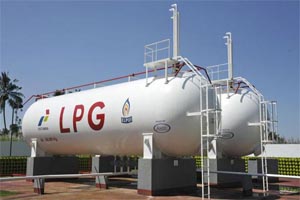
Mecom Gas Targets Storage Expansion Through Planned Public Offering
A Pakistani LPG marketing and distribution company, Mecom Gas Pvt. Ltd., is gauging an initial public offering on the Pakistan Stock Exchange to raise about $20 million for the expansion of a new LPG storage facility. The company Mecom Gas Pvt. Ltd., imports LPG from the Middle East and distributes it nationwide, as a financial advisor for the transaction, Arif Habib Ltd. is reportedly engaged. Proceeds from the IPO will be utilized to build a storage capacity of 3,000 tons, objected at strengthening supply resilience. The strategic move comes amid increasing volatility in Pakistan’s energy sector, exacerbated by the ongoing conflict involving Iran. The country remains heavily reliant on Gulf energy imports, exposing it to price fluctuations and balance-of-payments challenges. A recent surge in oil prices has widened the current account deficit, while LPG prices have nearly doubled over the past six months. Expanding storage capacity is observed as a critical step to stabilize supply and mitigate price shocks, with national storage needs requiring important scaling to ensure adequate reserves.
|
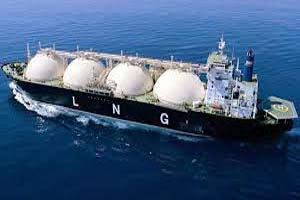
Energy Supply Crisis Forces Renegotiation of LNG Terminal Charges
Pakistan has secured temporary financial relief from its two LNG terminal operators—Engro Elengy Terminal Pakistan Ltd. (EEPTL) and Pakistan GasPort Consortium Ltd. (PGPCL)—through revised commercial arrangements aimed at easing payment obligations during recent supply disruptions. The concessions follow regional instability linked to missile-related tensions affecting Qatar’s Ras Laffan LNG facilities, which triggered force majeure declarations and disrupted cargo flows. Under existing long-term agreements, Pakistan remains liable to pay approximately $538,535 per day, or nearly $15 million monthly, in fixed capacity and utilization charges regardless of LNG deliveries. In response, PGPCL agreed to extend support for 34 days, while EEPTL provided relief for 39 days during the period when LNG supplies were unavailable. While specific financial concessions remain undisclosed, officials described the arrangement as a one-time measure in the national interest. The revised agreements were approved by Sui Southern Gas Company (SSGC) and Pakistan LNG Limited (PLL). Despite initial considerations to invoke force majeure to suspend payments, contractual obligations were found to favor terminal operators. Although the temporary relief offers short-term fiscal easing, Pakistan continues to face structural challenges tied to long-term LNG contracts that exert sustained pressure on public finances and foreign exchange reserves.
|

Clover Pakistan Limited to Acquire 40% Equity Stake in Quick Gases
Clover Pakistan Limited has announced a strategic investment in Pakistan’s LPG sector through the proposed acquisition of a 40% equity stake in Quick Gases (Private) Limited. The target company is engaged in LPG storage, marketing, and distribution, and is currently developing infrastructure encompassing storage facilities, filling capacity, and a distribution network. The project holds a valid OGRA construction license, positioning it for commercial operations upon completion. Through this acquisition, Clover Pakistan aims to gain significant influence over the operational, financial, and strategic direction of Quick Gases. The Board of Directors has granted in-principal approval for the transaction and has authorized management to proceed with executing a Share Purchase Agreement, along with completing all requisite regulatory and statutory formalities. This move reflects Clover Pakistan’s broader strategy to diversify its investment portfolio and strengthen its footprint in the energy and industrial infrastructure sectors, capitalizing on growth opportunities within Pakistan’s evolving LPG market.
|
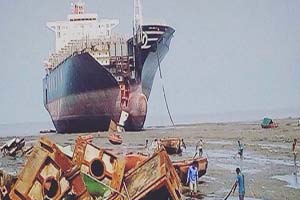
Pakistan Passes Ship Recycling Law to Implement Hong Kong Convention
To implement the Hong Kong International Convention for the Safe and Environmentally Sound Recycling of Ships, 2009, Pakistan has endorsed new maritime legislation. A step toward modernizing the country’s ship recycling industry. Following its earlier passage by the National Assembly, The Senate has agreed the Environmentally Sound Management of Inventory of Hazardous Material on Ships Bill, 2026. The legislation with a strong focus on improving environmental protection and workplace safety standards, presents an inclusive regulatory framework governing hazardous materials in ship recycling. It mandates surveys, inspections, and certification of hazardous material inventories for all vessels entering Pakistani waters for dismantling. Non-compliance with new maritime legislation may result in strict penalties, including detention, seizure, or expulsion of vessels. The Ministry of Maritime Affairs will act as the focal authority for implementation and liaison with the International Maritime Organization. As among the top three global ship recycling nations, handling nearly one-third of global activity, Pakistan intentions to leverage alignment with international standards to boost industry growth. Amid global geopolitical disruptions, the government anticipates increased shipbreaking activity, with earlier estimates suggesting up to 400 vessels could be diverted to Pakistani yards. The legislation supports broader national objectives, including climate action, sustainable industrial development, and circular economy initiatives under the UN 2030 Sustainable Development Agenda.
|
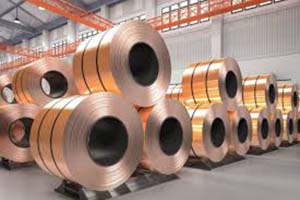
Pakistan’s Copper Export to China Exceed $1 Billion Milestone
Pakistan’s copper sector has appeared as one of the leading or fastest-growing contributors to the state’s industrial exports. During the first eight months of current fiscal year (FY 2025–26), reflecting robust bilateral trade and growing global demand, copper exports to China exceeded $1 billion. Highlighting the escalating international reach for processed and recycled metals, along with China, Pakistani copper products are gaining traction in markets such as the United States and Canada. Pakistan exported over $1.30 billion worth of copper products, between July and February of the current fiscal year. Of this, copper ingots accounted for $1.02 billion, while other copper-based products contributed approximately $280 million, exported to China. The sector’s progress has been mainly driven by the Export Facilitation Scheme (EFS), which remains to play a fundamental role in supporting recycled metals trade. The expansion has also stimulated activity across connected businesses, including processing, refining, logistics, warehousing, labor contracting, and small and medium enterprises within the supply chain. With continued policy support, industry forecasts that, Pakistan’s copper exports could upsurge to between $2 billion and $3 billion in the coming years, further strengthening its position in the international metals market.
|

Streamlining Biosafety Rules to Boost Trade Efficiency
The Government of Pakistan while abridging licensing procedures, introduced crucial amendments and reconsiderations to the Pakistan Biosafety Rules for the import of genetically modified organisms to liberalize the regulatory environment. To ensure compliance on Biosafety with the Cartagena Protocol, being operated through multiple committees in the existing biosafety framework, is set to be modernized to progress competence and condense approval or endorsement timelines. The recommended amendments, by the National Biosafety Committee under the Ministry of Climate Change and Environmental Coordination, are pending cabinet approval. These deviations are anticipated to suggestively influence the edible oil and poultry sectors; both counts severely on imported genetically modified soybean and canola for food, feed, and many other industrial uses. Under the revised framework, GMO grain imports—particularly soybean and canola—will continue without a cut-off date, confirming continuous supply. Licensing procedures will also be shortened and simplified, permitting international biotechnology companies to apply directly for approval. Once permitted, licenses will be available on the Pak-EPA website, empowering private importers to import approved GMO products without obtaining separate licenses. The amendment distinguishes innovative gene-editing technologies and empower Institutional Biosafety Committees at academic and research institutions to support laboratory-based research and study, refining governance, transparency, and comfort of doing business in the biotech sector.
|
|
© 2026 Alpine Marine Services Private Limited
all rights reserved
|
|
|