World Environment Day 2026 – National Climate Finance Strategy Phase 1
The National Climate Finance Strategy (NCFS) indicates a comprehensive context to address challenges by assembling, aligning, and scaling climate finance through a nationally maintained and result – oriented scheme. The policy pursues to reinforce coordination between both federal and provincial institutions, integrate climate contemplations into financial and development planning, and create transparent mechanisms for tracking climate finance flows. NCFS synchronizes climate finance with Pakistan’s commitments under the National Climate Change Policy, National Adaptation Plan, and NDC 3.0, while encouraging government approach to climate investment planning and development. The NCFS has been fastened with five strengthened strategic pillars, under which forty-two actionable interventions have been identified. First, it objects to better quantify financing needs and track climate expenditures and launch standardized definitions, fiscal risk assessments, and climate budget tagging systems. Second pillar aligned with national policy frameworks, and it prioritizes investments in adaptation, mitigation, and climate-resilient infrastructure. Third, it commends the development of a harmonized climate finance ecosystem, together with the establishment of a national project pipeline and an integrated digital platform to merge climate finance data and monitoring systems. Fourth, its emphases on mobilizing native resources and leveraging private capital through instruments such as green bonds, blended finance, carbon markets, and public-private partnerships. Fifth and final, the NCFS emphasizes research and innovation partnerships, green entrepreneurship, and green skills programs to human capital development, and startup acceleration mechanisms. Implementation and execution of the strategy will be anchored in existing institutional architecture of Pakistan under the Pakistan Climate Change Act 2017. Inspired by Nature. For Climate. For Our Future
|

World Food Safety Day 2026 – From Burden to Solutions: Safe Food Everywhere
World Food Safety Day is observed under the United Nations and mutually led by the World Health Organization (WHO) and the Food and Agriculture Organization (FAO). The Day highlights the importance of preventing, detecting, and effectively managing foodborne risks and diseases. World Health Organization shared updated report on worldwide, regional, and national estimates of foodborne diseases, linked deaths, and their influence on public health. The findings of the updated report are alarming. Each year, an estimated 866 million people globally fall sick due to contaminated food, while approximately 1.5 million dies. In addition, unsafe and contaminated food consequences in reduced productivity and efficiency, intensifying healthcare expenses, economic losses, social challenges and trials, with deteriorating tourism and trade. Such reliable and comprehensive examines of the universal problem of foodborne diseases support countries to articulate evidence grounded policies, assign capital resources effectively and efficiently, and prioritize interventions objected at shielding public health. The Ministry of National Food Security and Research is undertaking complete and comprehensive measures to strengthen food security, improve agricultural output, and alleviate climate related influences through research and technology driven interventions. These initiatives include the delivery of quality seeds, better access to agricultural inputs, better mechanization, establishment agricultural value chains, attractive storage amenities, and refining market systems.
|
World Oceans Day 2026 – Safeguard Marine Biodiversity, Coastal Livelihoods and The Blue Economy
Stressing the critical role of oceans in regulating the universal climate, producing oxygen, supporting biodiversity and basis of human survival, and financial prosperity. For too long, civilization has treated the ocean as an infinite resource, and environmental threats directly affecting the livelihoods of millions of people reliant on fisheries, shoreside possessions and maritime trade. Protecting oceans is a communal obligation and a nationwide imperative as lines may exist on maps, but marine life moves freely across the single ocean. Ministry of Climate Change and Environmental Coordination has called for nationwide action to guard Pakistan’s marine ecosystems from mounting intimidations posed by climate change, pollution, loss of biodiversity and unjustifiable abuse of natural resources. According to UN assessments, the ocean generates as a minimum 50 % of the oxygen humans breathe, absorbs nearly a 25 % of global carbon dioxide discharges and regulates weather systems universally. Rising temperatures of ocean, acidification, plastic pollution and over mistreatment are pushing marine ecosystems beyond their limits. Universally, around 90 % of large fish populations have been exhausted, while nearly 50 % of the world's coral reefs have been lost. Pakistan having 1,050-kilometre coastline and rich marine ecosystems, including mangrove forests, coastal wetlands and fisheries, progressively vulnerable to sea-level rise, marine pollution, coastal erosion, extreme weather events and warming seas. Pakistan continued dedication to the preservation and sustainable use of marine biodiversity and was vigorously contributing to intercontinental efforts through the Agreement on Biodiversity Beyond National Jurisdiction. Beginning from the Indus Delta’s mangrove forests to the deep water of the Arabian Sea, healthy oceans are critical for climate resilience, biodiversity conservation, food security and a flourishing blue economy. The ministry advised inhabitants, industries, research and educational institutions, fishermen, other related coastal communities and government to decrease plastic pollution, support conservation initiatives, contribute in clean-up movements and implement sustainable practices to safeguard marine resources for future generations. Reimagine: Beyond the world we know, a new relationship with our ocean.
|

Ports–Sports Cooperation Initiative
Muhammad Junaid Anwar Chaudhry Federal Minister for Maritime Affairs and Shahid Afridi former captain Pakistan cricket had a meeting to discuss collaboration between the Pakistani ports and the sports sector. The discussions focused on exploring and expanding the part of maritime and coastal infrastructure beyond trade and logistics to include sports development, youth engagement and environmental awareness. Both the members also reviewed suggestions for initiation coastal sports and ocean awareness drives in Karachi, Gwadar and other port cities. These initiative cricket tournaments combine with awareness sessions on mangrove conservation, marine biodiversity and sustainable use of ocean resources. Under the projected agenda, maritime institutions would deliver infrastructure provision, while sports organizations and private sector partners would develop training and outreach programs. The minister assured full support from maritime institutions for initiatives intended at promoting sports, predominantly in coastal regions. Ports and maritime zones are increasingly becoming centers of national development where education, sports and environmental awareness can be unified. Under blue economy vision, sports development could be advanced through public-private partnerships, including the establishment of coastal sports academies, cricket training centers and structured youth programmed along the coastline. Both sides settled to mature a comprehensive roadmap to support collaboration between the maritime and sports sectors, directing to endorse Pakistan’s blue economy vision while encouraging social cohesion and environmental awareness through sports.
|

Karachi Waterfront Development
Pakistan has signed MoU with Saudi and resident partners to discover expansion of a maritime business area on prime Karachi Port Trust (KPT) waterfront land. Federal Minister of Maritime Affairs said the MoU was signed among the KPT, Saudi Business Council – NAJD Gateway Holding Company, Arif Habib Dolmen REIT Management Limited, and the Pakistan Corporate Consortium. The planned project would be constructed on a 140 – acre KPT site on MT Khan Road, Karachi, and is envisioned to renovate the area into a foremost commercial and maritime hub. The expansion is predicted to embrace up-to-date commercial infrastructure meant at fascinating investment, creating employment, and supporting urban development. The strategic alliance is a transformative chance to reveal the bursting potential of Karachi Port Trust’s waterfront assets and position Pakistan as a regional hub for maritime commerce and investment. Compliance of all regulatory and legal requirements under Pakistani law before the project proceeds. Subject to regulatory approvals, the development could become one of the largest waterfront commercial schemes in the area.
|
Strengthening Wheat Seed Governance and Market Regulation
In the 13th meeting of the National Wheat Oversight Committee (NWOC), chaired by Federal Minister for National Food Security & Research to review important matters linked to wheat procurement, seed regulation, wheat policy, and production data. The meeting was attended by senior officials of the Ministry, representatives of provincial governments, and other relevant stakeholders. The Committee reflected on complaints being raised by seed companies concerning the seizure of wheat seed stocks by the Government of Punjab. In reply, the Punjab government explained that some companies were apparently retailing wheat in the open market under the guise of seed stocks, and the actions were taken only against such entities. Committee highlighted the importance of transparency and strict compliance to legal standards in the seed sector. Relevant authorities were directed to proceed strong action against fraudulent seed companies involved in the movement and trade of wheat seed, underscoring that there would be zero tolerance for violations of regulatory obligations. All stakeholders commended to function within the legal context to keep farmers’ interests and ensure the availability of quality seed. The meeting also reviewed the provincial feedback on the proposed National Wheat Policy 2026–2030. The government reaffirmed its pledge to ensuring food security, safeguarding farmers, firming up agricultural governance, and refining the competence of wheat procurement and distribution systems. The meeting concluded with a collective commitment from all stakeholders to continue working collaboratively to progress wheat management, uphold market steadiness, and advance Pakistan’s agricultural development goals.
|
Boosting Trade Facilitation Through New Hawksbay Logistics Terminal
Pakistan Customs has announced an establishment off-dock terminal at Hawksbay, Karachi, expansion in the Pakistan's logistics and trade facilitation infrastructure. The terminal will be operated by a subsidiary of Denmark-based Scan-Group A/S namely International Cargo Terminals Pakistan (Pvt.) Ltd. (ICT). The establishment of the Hawksbay terminal is a step towards modernizing Pakistan's logistics infrastructure. The off-dock terminal at Hawksbay is the second foremost logistics facility founded in Pakistan by Scan-Group A/S, following its efficacious investment and maneuvers at Port Qasim. The continued expansion of Scan-Group's operations reflecting grown international stockholder confidence in Pakistan's financial potential and the government's exertions to encourage an investment-friendly business environment through collaborated improvements and trade facilitation initiatives. The terminal will help progress cargo handling capacity, lessen congestion at ports, expedite customs clearance processes, and contribute to greater efficiency in the movement of international trade. Pakistan Customs' committed to easing legitimate trade, supporting investment, and emerging up-to-date customs and logistics infrastructure to strengthen the national economy. Pakistan Customs in enabling the development of modern, technology-driven logistics infrastructure to support Pakistan's trade and port operations.
|
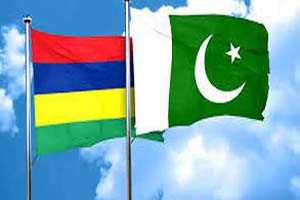
Pakistan, Mauritius Agree to Boost Trade, Business Connectivity
Coordinator to the Prime Minister on Commerce, held a meeting with the Ministry of Foreign Affairs, Republic of Mauritius, to discuss ways to fortify mutual trade, investment, and economic cooperation between the two countries. During the meeting, both sides reviewed the current status of bilateral trade relations and explored new prospects to develop commercial engagement. Discussions focused on enhancing bilateral trade ties, encouraging investment, and fostering stronger economic ties between Pakistan and Mauritius. The closer collaboration between the private sectors of both countries, underscoring the role of business-to-business relations in cracking new opportunities related to trade and investment. Both countries share opinions on expanding institutional collaborations, smoothing better commercial connectivity, and recognizing evolving sectors for jointly beneficial partnerships. Both Pakistan and Mauritius articulated fulfilment over the optimistic trajectory of bilateral relations and confirmed commitment to maintaining regular dialogue and firming economic cooperation in the interest of shared prosperity.
|
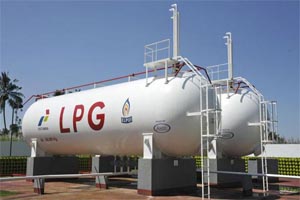
Uninterrupted LPG Imports Through Gabd – Rimdan Border
Pakistan Customs has confirmed that customs clearance processes at the Gabd – Rimdan border is fully functional, with the continuous movement and clearance of important commodities, particularly Liquefied Petroleum Gas (LPG). Customs clearance operations at the Gabd – Rimdan border continue without interruption, and the movement of essential commodities remains smooth and fully operational. To ease the import of essential cargos, including LPG and bitumen, Pakistan Customs is processing such shipments through an advanced mechanism, Green Channel clearance, ensuring quick clearance and uninterrupted supply to domestic markets. Gwadar has implemented a series of protocols intended at streamlining import clearance procedures with enhanced transparency and strengthening compliance controls to safeguarding government revenue. All these reforms have been presented to address occurrences of misdeclaration, disguise, pilferage, and illegal removal of imported goods, while simultaneously easing legitimate trade. According to the Customs Rules, 2001, it is obligatory for the importers to complete prescribed customs formalities, together with filing of import manifests, gate-in procedures, weighment, scanning, and submission of Goods Declarations prior to the movement of consignments to private warehouses. These procedures are designed to ensure transparency, regulatory compliance, and efficient trade facilitation.
|

First Deep Conversion Greenfield Refinery Project at Hub
To discuss the development of Pakistan’s first deep conversion Greenfield refinery project, planned at Hub, The Federal Minister for Commerce held a meeting with a delegation from SPEC Refinery Pvt. Ltd. The delegation shared an update on the progress of project and emphasized its strategic worth in enhancing Pakistan’s energy security, reducing dependence on imported refined petroleum products, and promoting industrial growth. The proposed refinery will apply progressive deep conversion technology to make the most of the production of high-value petroleum products while accommodating a broad range of crude oil grades sourced from international markets. The delegation requested government support in facilitating the implementation of the Greenfield Refinery Policy and expediting the issuance of pending regulatory approvals from the Federal Board of Revenue to ensure timely execution. The initiative represents a long-term investment in Pakistan’s energy sector and is expected to serve as a catalyst for the development of downstream petrochemical industries. Preliminary groundwork has already commenced, with future implementation strategies currently being finalized. The project is also expected to generate approximately 2,000 direct and indirect employment opportunities in Hub, contributing to regional economic development, skills enhancement, and technology transfer.
|
|
© 2026 Alpine Marine Services Private Limited
all rights reserved
|
|
|