|
||||
Alpine Marine Services Pvt LtdPakistan Trade Bulletin Sustainability • Ports • Trade • Energy • Logistics • Policy |
||||
|
||||
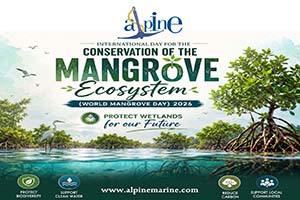 International Day for the Conservation of the Mangrove Ecosystem – 2026Globally July 26, celebrated as International Day for the Conservation of the Mangrove Ecosystem, addresses to develop mindfulness of mangroves' importance and encourages sustainable mangroves conservation. Mangroves are unique ecosystems between land and sea to support biodiversity, protect coastal communities, enhance food security, and help as a natural defense against storms and erosion. With serious ecological and socio-economic impacts mangroves are disappearing three to five times faster than overall global forest losses. According to the current estimates about half of the world's mangrove forests have vanished to date over the last four decades. In Pakistan, mangroves are one of the prominent coastal ecosystems and possesses the largest arid-climate mangrove ecosystem in the world. Pakistan currently ranks around seventh globally in mangrove forest area, soil in mangrove forest is a strong carbon sink. Chiefly with about 97% of its mangroves located in Indus Delta with smaller forest along the coast of Baluchistan at Miani Hor, Kalmat Khor, and Jiwani. Recent Remote sensing research reflected the estimated national mangrove cover at approximately 1,210 km² in 2023, showing a net increase compared to 2016.Mangrove cover has generally increased due to large-scale restoration and plantation programs. Pakistan has undertaken several successful conservation programs, The Delta Blue Carbon Project, one of the world's largest mangrove restoration and blue-carbon initiatives. Several extensive restoration drives have been carried out by the Sindh Forest Department, WWF-Pakistan, IUCN, local communities, and other stakeholders. Restoration projects have generated employment opportunities and improved community income through sustainable resource management and carbon-finance initiatives. Pakistan has made notable progress in restoring and expanding its mangrove forests, making them an important contributor to achieving SDGs 13, 14, and 15. While restoration efforts have increased mangrove coverage, continued action is needed to address threats such as pollution, freshwater shortages, and coastal development. Sustainable management of mangroves remains essential for biodiversity conservation, climate resilience, and the livelihoods of coastal communities. |
||||
 Lloyd's JWC Removes Pakistan from War Risk Listed AreasIn the circular JWLA-034, issued by the Joint War Committee (JWC) of Lloyd’s, Pakistan is delisted from the Hull War, Piracy, Terrorism and Related Perils listed Area, a classification based on the imposed war risk insurance surcharges on all vessels calling at Pakistani Port for over a decade. The delisting is a result of a sustained, Long-term, coordinated diplomatic and maritime engagement effort pursued official of Pakistan High Commission London, in close coordination with the Ministry of Maritime Affairs, the Ministry of Foreign Affairs and the Pakistan Navy. Key elements of the strategy included, in person and online meetings, submission of comprehensive maritime dossier, Advocacy through senior Pak – UK bilateral channels, engagement with the UK Foreign, Commonwealth & Development Office, regular representation in Lloyd’s Intelligence Briefings by the DNA, Strategic coordination with Herminius undertaken by the DNA, the essential involvement of the Chief of the Naval Staff with JWC on July 14, 2026, represented Pakistan. War risk insurance premiums, will no longer be automatically triggered by the Listed Areas classification and will led to reduced shipping costs, improve the commercial attractiveness of Karachi, Port Qasim and Gwadar aligned with the elimination of disgrace of Port of Pakistan. |
||||
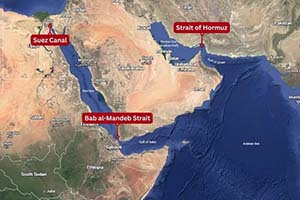 Maritime Traffic Through Bab el-Mandeb Strait DroppedFollowing attacks by Yemen’s Houthi forces on Saudi oil facilities along the Red Sea coast, maritime traffic through the Bab el-Mandeb Strait dropped sharply, reaching its lowest level in several months. According to shipping data, only 11 commodity vessels crossed the strategic waterway, highlighting growing concerns over regional security. The disruption stems from Houthi efforts to block Saudi exports, further escalating tensions linked to the wider U.S.-Iran conflict that has already constrained oil flows through the Strait of Hormuz. Of the vessels transiting Bab el-Mandeb, seven were oil tankers, including three entering the Red Sea. Two very large crude carriers (VLCCs) were headed to Yanbu to load Saudi crude, while another vessel had Russian connections. Four tankers exited the Red Sea, transporting Saudi, Emirati, and Russian crude mainly to China and Pakistan. Notably, the VLCC New Pearl departed carrying 2 million barrels of Saudi oil for China, becoming the fourth Chinese-bound supertanker to leave since the Houthis announced a naval blockade. Houthi spokesperson Yahya Saree stated that the group targeted Aramco facilities in Jizan and Yanbu on Saturday. Meanwhile, shipping activity through the Strait of Hormuz also remained subdued despite a pause in U.S.-Iran hostilities. Fewer than 10 commodity vessels crossed daily over the weekend, with only seven transits recorded on Sunday. The reduced traffic underscores ongoing concerns over maritime security and global energy supply routes, contributing to higher crude oil prices across key international markets. |
||||
 IMO Urges Enhanced Maritime Security Amid Rising Red Sea TensionsThe recent attacks on commercial vessels in the Red Sea have intensified concerns regarding maritime security, the safety of seafarers, and the resilience of global supply chains. In response, the International Maritime Organization (IMO) has strongly condemned these incidents, warning of their potential impact on international trade, freedom of navigation, and one of the world’s most critical maritime corridors. IMO Secretary-General Arsenio Dominguez unequivocally denounced the attacks, describing them as unjustifiable acts that endanger seafarers, threaten maritime security, and jeopardize the stability of global commerce. He emphasized that seafarers play an essential role in sustaining international trade and should never be exposed to unnecessary risks during periods of conflict. The IMO has urged ship operators to undertake robust risk assessments before transiting the region and renewed its call for the immediate release of all seafarers held captive following piracy-related incidents. Highlighting the Red Sea’s strategic importance, the organization cautioned that continued attacks could disrupt trade routes, heighten freight risks, and increase the likelihood of environmental damage. Reaffirming its commitment to maritime safety and environmental protection, the IMO emphasized that de-escalation remains the most effective path toward ensuring secure and uninterrupted global shipping operations. |
||||
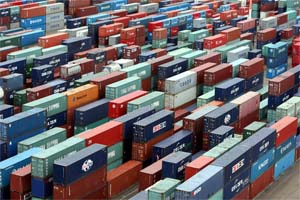 Measures Aimed at Reducing Container CongestionPakistan Customs has introduced a series of landmark measures aimed at reducing container congestion at Karachi International Container Terminal (KICT) and South Asia Pakistan Terminal (SAPT) as Pakistan’s maritime trade experiences a significant rise. The increased pressure on both Karachi ports has been linked to stronger international trade activity, supported by improving global economic conditions and the easing of security tensions in the Persian Gulf, resulting in higher vessel arrivals and container movements. To prevent delays and improve cargo flow, Pakistan Customs has intensified customs clearance operations across Karachi ports. As part of the Maritime Task Force initiative, Pakistan Customs has introduced several historic reforms designed to modernize port operations and strengthen supply chain efficiency. Customs has also completed the installation of Non-Intrusive Inspection (NII) scanners at all ports, allowing faster cargo inspections while reducing physical examinations, clearance times, and logistics costs for businesses. the continued implementation of Faceless Assessment and Faceless Examination systems has further improved transparency, accelerated customs processing, and enhanced operational efficiency across Pakistan’s ports. Pakistan Customs said it will continue working closely with terminal operators, shipping lines, freight forwarders, and the wider trading community to maintain smooth cargo movement and sustain efficient port operations. The department is also closely monitoring developments in the Strait of Hormuz to respond effectively to any emerging challenges that could affect regional shipping and international trade. |
||||
-vessel.jpg) Pakistan’s First Roll-On/Roll-Off (RoRo) VesselA foremost milestone with the arrival of the country’s first Roll-on/Roll-off (RoRo) vessel has been achieved in the maritime and logistics industry of Pakistan. The arrival of M.V. Grande Shanghai, the first ever Roll-on/Roll-off vessel carrying more than 2,000 electric vehicles (EVs) to Karachi Port. Federal Ministry for Maritime Affairs addressed the development as a momentous success that highlights growing capacity of Pakistan to handle specialized cargo and internationally strengthens its position in maritime trade. The 220-meter vessel successfully berthed at Karachi Gateway Terminal Multipurpose Limited (KGTML) under the Karachi Port Trust (KPT). The operation followed government approval to facilitate RoRo shipments of electric vehicles, echoing Pakistan’s commitment to modernizing its port infrastructure and logistics services. RoRo vessels are particularly intended to transport wheeled cargo, empowering vehicles to be driven directly on and off ships. The approach cuts handling and operating time, advances safety measures and protocols, lessen the risk of damage, and enhances port efficiency. The successful berthing of the vessel reflects the KPT’s investment in advanced, technology – driven logistics solutions and port’s ability to meet international standards. The milestone is anticipated to lift Pakistan’s maritime logistics capabilities, support international trade, and create new opportunities for EV imports and future specialized cargo operations, while strengthening the country’s role in the global clean mobility supply chain. |
||||
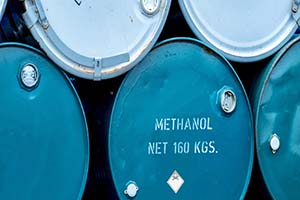 MTF Releases New Safety Guidelines for Methanol-Fueled VesselsAs the international shipping industry expedite its modification in the direction of cleaner marine fuels, guidance to help shipowners and operators has been released for effective Safety Management Systems (SMS) for methanol – fueled vessels by the Maritime Technologies Forum (MTF), in collaboration with BIMCO and other industry partners. Allied with the International Safety Management (ISM) Code, recommendations deliver a factual and proficient framework for managing methanol related operational and safety risks. Key areas have been covered in the guidance including, vessel operations, emergency preparedness, crew training, maintenance, incident reporting, audits, and continuous improvement. Methanol is emerging as promising low carbon fuel due to its ease storage and compatibility with existing fuel infrastructure, it also offers challenges such as toxicity, low flashpoint, and difficult-to-detect flames and vapors. The all-inclusive environmental benefits depend on process of methanol production, and its physical properties introduce several safety considerations with mandatory cautious management. MTF and BIMCO emphasize the importance of comprehensive risk assessments, robust safety procedures, and workforce competence. The guidance boosts strong reporting and learning mechanisms to help organizations continuous improvement in safety standards as methanol adoption develops across the international fleet. |
||||
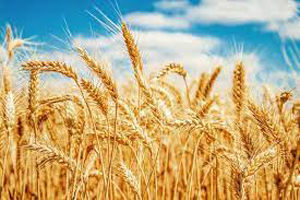 Government Moves to Stabilize Wheat Market Through Strategic ImportsPakistan has declared strategies to import one million tons of wheat to meet the need of locally supply shortages and stabilize intensifying flour prices across the Pakistan. The decision originates amidst information of wheat shortages, particularly in Province of Sindh, and growing pressure on local markets due to constrained and controlled supplies. According to, Ministry of Food Security, the import initiative is intended at meeting provincial requirements while ensuring market stability and maintaining the availability of affordable wheat. In addition to imports, to ease supply concerns and to support provincial demand, Pakistan Agricultural Storage and Services Corporation (PASSCO) will release wheat stocks. Lower-than-expected production estimates for the 2025-26 wheat crop lead the strategic wheat import. The production target of the wheat production for the 2025-26 wheat crop 29.68 million tons, and 27.48 million tons by the Federal Committee on Agriculture and SUPARCO respectively. With annual national consumption estimated at around 31 million tons, weaker yields and reduced cultivation areas the imports are expected to help bridge the supply gap and support food security objectives. |
||||
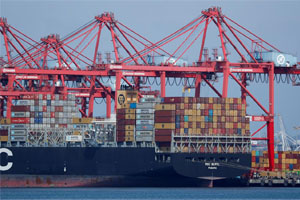 PICT Expands into Logistics Services to Drive Future GrowthAs a part of extension of growth strategy Pakistan International Container Terminal Limited (PICT) has extended into the logistics services sector. The new business expansion will include cargo handling operations, container movement and transportation from terminals, and last-mile delivery services. According to the PICT, the expansion aligns with existing operational expertise, infrastructure, and business experience. PICT specified that the initiative is an essential extension of current competences and capabilities with supports of long-term objective of providing integrated logistics solutions alongside container and terminal management services. By leveraging its established infrastructure, customer relationships, and sector knowledge, the company aims to strengthen its position within the logistics and supply chain industry. The company also noted that the financial contribution of this new business segment is expected to be modest initially and will largely depend on the pace of execution and the volume of business generated over time. PICT added that it will continue to update the Pakistan Stock Exchange regarding developments related to its future business plans. |
||||
 Approved Amendments to the Pakistan Oil Refining Policy 2023Amendments to the Pakistan Oil Refining Policy 2023 has been approved by the federal government. The amendment meant to create a pathway for around $5-6 billion investment in refinery modernization. The amended policy is designed to empower local refineries to yield Euro-V-compliant fuels, boost petrol and diesel output, condense the requirement on imported petroleum products, and decrease furnace oil. To boost investment, several incentives has been introduced the government of Pakistan, including a 10% estimated duty protection on Motor Spirit (MS) and High-Speed Diesel (HSD) for seven years. Additional duties aggregated on MS and HSD will be placed in an OGRA-managed escrow account to moderately finance refinery upgrade projects. Refineries can access a portion of these funds for importing new or used equipment. The policy also encompasses the 7.5% deemed duty on HSD for up to 20 years, offers customs duty reimbursement on imported crude oil through IFEM, and grants sales tax exclusions on imported machinery, supporting long-term sector growth, investment, efficiency, and energy security. |
||||
 Petroleum Ministry Forms Committee to Address Oil Tankers' ConcernsAs the government of Pakistan takes step to resolve operational hindrance affecting oil transportation, federal ministry for petroleum has established a committee to report the longstanding concerns of the Oil Tanker Contractors Association, pointing to submit tangible recommendations within one week. The committee will be led by the Special Secretary Petroleum and with other stakeholder including the Director General (Oil), representatives of the Oil and Gas Regulatory Authority, the Oil Tanker Contractors Association, and the Secretary General of the Oil Companies Advisory Council. The Oil Tanker Contractors Association shared demands, lessen the White Oil Pipeline allocated quota, induction of fair mechanism for awarding freights contracts by OMCs, incorporating the freight calculation formula with the Consumer Price Index with the instant termination of commercial loading. OGRA needs to work closely with all involved stakeholder to go with the practical approach to resolve issued raised by oil tankers association. OMCs to share written policies governing the award of freight contract, to resolve timely and in transparent manner any identified discriminatory practice. Aimed to improve regulatory compliance and operational transparency within the petroleum supply chain, OGRA to reinforce the tracking mechanism for oil tankers and ensure that dealers' vehicles are not used in primary transportation operations. Ministry of Petroleum and Oil Tanker Contractors Association linked to strengthen ensuring uninterrupted fuel supplies across the country while resolving the challenges raised by Oil Tanker Contractors Association. |
||||
 |
||||
|
SHIP AGENCY - NVOCC - PORT OPERATIONS - TERMINAL OPERATIONS
Karachi - Port Qasim - Gwadar - Gadani
|
||||
| This bulletin is produced by Alpine Marine Services Private Limited for the exclusive use of our principals and business partners. Information is sourced from public maritime intelligence, government announcements, and industry reporting. This is not investment or legal advice. © Alpine Marine Services Private Limited 2026. All rights reserved. |