|
||||
Alpine Marine Services Pvt LtdPakistan Trade Bulletin Sustainability • Ports • Trade • Energy • Logistics • Policy |
||||
|
||||
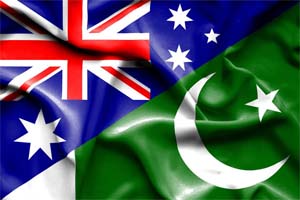 Pak – Aus Minimum Bilateral Trade of $3 BillionFollowing a move to encourage Australian investment in Pakistan, according to the Australian High Commissioner, discussions to modernized Pakistan-Australia Bilateral Investment Treaty are anticipated to conclude by December. Australia and Pakistan have a treaty of 1998 but needs to be modernized aiming to altering necessities of both economies. According to State Bank of Pakistan statistics, bilateral trade in goods declined in 2024-25 from $973 million to $672 million in comparison with 2025-26. Joint exertions to reverse the trend and set a target of bilateral trade to at least $3 billion. The Pakistan-Australia Joint Trade Committee has not met since March 2023. Discussions on a preferential trade arrangement, highlighted that several competing countries enjoy duty-free access to Australia while Pakistani exporters do not. Exports from Pakistan to Australia chiefly covers apparel, rice, home textiles, surgical instruments and sports goods. Identified as promising areas for export expansion includes Industrial workwear, safety gloves, auto parts, engineering goods, leather products, spices, Himalayan pink salt, furniture and marble. Pakistan holds substantial mineral resources, and in contrast Australia has world-class expertise in exploration and mineral processing, lead to significant joint ventures opportunities for both countries. Other identified key area for bilateral cooperation are Education and skills development, agriculture, and exporting GMO canola to Pakistan. A delegation from Pakistan will visit Australia in next month to observe opportunities in pulses. |
||||
 Pakistan to Export 200,000 MT Sugar and Import 750,000 MT of WheatThe government of Pakistan has decided to allow the export of 200,000 metric tons more sugar, despite last year's similar decision escalating prices to Rs220 per kilogram. The steering committee on sugar decided to allow the export and to progress on mechanism to ensure to keep stable prices despite the export. A summary will be shared before the Economic Coordination Committee (ECC) for approval. It is the second time in three weeks that the government of Pakistan has permitted sugar exports. The ECC on August 19 allowed the export of 108,000 metric tons of imported sugar. Satisfaction over the availability of adequate sugar stocks in Pakistan. The country will still have over 600,000 metric tons of surplus sugar and out of the shared stock 200,000 MT will be exported subject to the approval from ECC. In June 2025, the government permitted the import of 500,000 MT of sugar after it first exported 790,000 MT, forming a deficit and allowing millers to make windfall gains. The government of Pakistan has also floated a tender to import 750,000 MT of wheat, as prices have flown over 75% in the local market due to failures of the Punjab and Sindh provincial governments to procure wheat against approved targets. |
||||
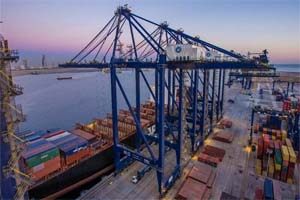 Pakistan Urged Kazakhstan to Leverage Ports of PakistanTo boost and strengthen cooperation in seaports and regional connectivity, Pakistan has urged Kazakhstan to take advantage of ports of Pakistan as gateways to South Asia, Central Asia, and the Gulf, offering modest tariffs and other incentives related to CPEC included benefit from container handling, logistics, off-dock terminals, free trade zones and other port facilities under the CPEC. KPT and PQA emphasized spare capacity to handle Central Asian cargo, while stressing that a dedicated multipurpose terminal at Gwadar was crucial for long-term trade growth. According to the KPT administration, the Kazakh side on port facilities and a planned maritime business district spanning 140 acres of urban land, PQ chairman highlighted the Pakistan’s role as an energy hub and proposed cooperation in off-dock terminals linked with rail networks for Central Asian trade. Representative from Gwadar informed about Gwadar’s potential, including full exemptions on duties and sales tax, its off-dock terminals, and its shortest land-sea route for Central Asian countries through the coastal highway. Kazakh Transport Minister shown a strong interest in intensifying maritime cooperation and building long-term collaboration with Pakistan. |
||||
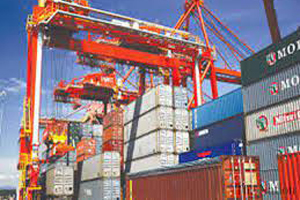 30% Pre-Arrival Clearance and 65% Green Channel Target to Speed Up Cargo ClearancePrime Minister Pakistan has approved targets to accelerate trade and cargo clearance in Pakistan, including achieving 30% pre-arrival clearance and increasing the share of cargo processed through the green channel to 65% by the end of the current financial year. During the meeting, the Time-Release Automated System for all ports was briefed. The system is part of the measures being pursued to improve the processing of cargo at Pakistan’s ports and facilitate trade-related procedures. The government to increase the number of Authorized Economic Operators to more than 50 by the end of the current financial year. Prime Minister Pakistan directed authorities to conduct an all-inclusive audit of all non-tariff measures and eliminate redundant blockades to trade and permitted the establishment of a working group for assessment of these measures and directed to submit a roadmap within one month for eliminating unnecessary regulations and facilitating trade. |
||||
 IMO Joined IAEA to Launch ATLAS InitiativeThe IMO has joined the IAEA in launching the ATLAS initiative, a new international platform focused on the safe, secure and safeguarded use of nuclear technologies at sea. During the IAEA’s High-Level Forum in Washington, D.C., held from 26–27 August 2026. The ATLAS initiative was launched, as international interest raises in innovative maritime nuclear applications, and the need for appropriate international frameworks to address the complex legal, regulatory and safety considerations associated with their potential deployment. IMO’s involvement carries maritime law, maritime safety, maritime security, and marine environmental protection into discussions surrounding the future deployment of nuclear technologies at sea. ATLAS, which stands for Atomic Technologies Licensed for Applications at Sea, is intended to reinforce international cooperation on the safe, secure and safeguarded use of nuclear technologies in the maritime sector. During the forum, IMO’s Deputy Director at the Maritime Safety Division (Marine Technology and Cargoes), emphasized the IMO’s mandate for global ship safety, maritime security and marine environmental protection with the emphasized on the complementary role of the IAEA in areas related to nuclear safety, nuclear security and nuclear safeguards. |
||||
 New Strait of Hormuz Attack Raises Maritime Security and Oil Supply FearsA new attack on a vessel in the Strait of Hormuz has intensified concerns over maritime security, commercial shipping and global oil supplies, as the widening Middle East conflict continues to threaten vital energy and trade routes. Maritime authorities reported that a projectile struck a vessel while it was travelling through the strategic waterway. A fire broke out following the attack, and local authorities evacuated the crew. The incident has heightened concerns over global shipping, oil transportation and energy security, coming shortly after Saudi Arabia temporarily shut its key East-West oil pipeline following a drone attack. The pipeline has become an important alternative route for transporting Saudi crude to international markets while the Strait of Hormuz remains heavily disrupted by the war. The vessel attack was reported a day after Saudi Arabia announced the temporary closure of its East-West pipeline as a precaution following a drone attack that Baghdad and Riyadh said had originated in Iraq, where Iranian-backed militias operate. The continuing attacks in the widening Middle East war could push energy prices even higher after Brent crude surged back above $100 a barrel over the past week. Growing risks to major energy corridors are also increasing uncertainty for the international shipping industry. |
||||
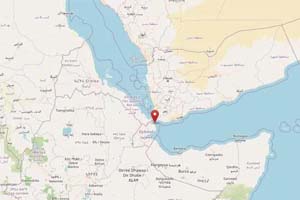 Houthi Seized Strategic Red Sea Island of MayunHouthi rebels in Yemen have seized the strategic Red Sea island of Mayun after apprehending the nearby port city of Mokha, hovering new distresses over global trade and shipping, maritime security and commercial shipping routes through one of the world’s most important maritime corridors. The latest expansions threaten to more disrupt international shipping and maritime trade in the Red Sea, predominantly around the Bab el-Mandeb Strait, through which approximately 12% of the international goods are normally transported. The seizure of Mayun, situated at the entrance to the Red Sea, and was confirmed by a senior military official from both Yemen’s internationally recognized government and a Houthi official. The island is strategically important for its geographical location near the Bab el-Mandeb Strait, linking the Red Sea with the Gulf of Aden. Mayun has developed as a chief substitute trade route for the movement of Saudi oil and other exports as Iran has targeted vessels in the Strait of Hormuz. The uncertainty has additional pressure on commercial maritime shipping and logistics for vessel operators navigating through the Red Sea and surrounding waters. Iran, in the meantime, invited for an end to Saudi Arabia’s blockade of Yemen and an instantaneous return to negotiations with the Houthis. |
||||
 National Plan of Action for the Conservation and Management of SharksPakistan’s Federal Minister for Maritime Affairs has publicized the Pakistan’s first 10-year National Plan of Action for the Conservation and Management of Sharks (NPOA-Sharks Pakistan 2025-2035) to encourage sustainable fisheries and shield marine biodiversity. Under the Marine Fisheries Department, the plan will be executed in three stages. The initiative intentions to restore shark populations, eliminate illegal shark finning, reduce bycatch mortality, protect critical habitats, and improve the livelihoods of coastal fishing communities. Crucial actions include sturdier fisheries enforcement, improved research and data collection, species-specific protections, shark sanctuaries, mangrove restoration, and mandatory “fins naturally attached” policies. International cooperation, including engagement with the Indian Ocean Tuna Commission, is also part of the framework. During the first five years, the Pakistan’s Federal Ministry for Maritime Affairs estimates funding requirements of $3.8 million to $5 million. Progress monitoring through annual performance indicators and official assessments every three years, with the objective of making Pakistan a prime in sustainable shark fisheries by 2035. |
||||
 |
||||
|
SHIP AGENCY - NVOCC - PORT OPERATIONS - TERMINAL OPERATIONS
Karachi - Port Qasim - Gwadar - Gadani
|
||||
| This bulletin is produced by Alpine Marine Services Private Limited for the exclusive use of our principals and business partners. Information is sourced from public maritime intelligence, government announcements, and industry reporting. This is not investment or legal advice. © Alpine Marine Services Private Limited 2026. All rights reserved. |