|
||||
Alpine Marine Services Pvt LtdPakistan Trade Bulletin Sustainability • Ports • Trade • Energy • Logistics • Policy |
||||
|
||||
 IMO Biofouling Regulations on the HorizonThe IMO's emerging biofouling framework, a new layer of operational compliance for the global fleet. The industry's practical experience will be predominantly vital in shaping how those necessities work in the real world. For ship operators, it is not simply a regulatory discussion, the decisions being made now may perhaps influence everyday hull maintenance and port operations for years to come. The first global legally binding framework for ship biofouling management is being evolve by IMO, a move impact vessel inspection, hull cleaning, maintenance planning, and port operations worldwide. To support the development of practical and effective regulations, BIMCO is inviting shipowners, operators, and seafarers to share their experiences through an industry survey. Biofouling, caused by the accumulation of algae, barnacles, and other marine organisms on hull surfaces, can increase fuel consumption, reduce vessel efficiency, and contribute to the spread of invasive aquatic species. Main issues under review include inspection practices, hull cleaning methods, coating performance, cleaning thresholds, certification requirements, service availability, operational restrictions, monitoring systems, compliance costs, and environmental considerations. As mandatory requirements are being considered, industry participation is essential to ensure future regulations are realistic and operationally feasible. The decisions made today could shape vessel maintenance and environmental compliance practices across the global fleet for years to come. |
||||
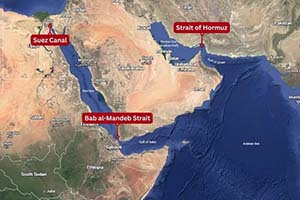 Protecting Maritime Routes for Global Energy SecurityRecently in the 17th IEF ministerial meeting and the 25th WPC Energy Congress, Ministers from OPEC and non-OPEC countries participating in the Declaration of Cooperation met in Riyadh. The ministers reviewed global oil market conditions and reinforce their commitment to achieve and sustain a stable oil market. A key focus of the discussions was the protection of international maritime routes, which are crucial for the uninterrupted flow of energy supplies. The current disruption of energy flows has raised shipping and insurance costs, in some cases exceeding one-third of the commodity's value led to the efficient movement of crude oil and petroleum products, while adding inflationary pressure across the global economy. OPEC+ will continue to monitor developments and engage with governments, industry stakeholders, and international organizations to support safer and more efficient global shipping conditions. |
||||
 DG ILO Visited Gadani Shipbreaking YardTo review progress on modernization of the shipbreaking industry the Director-General of International Labor Organization, accompanied by Federal Minister for Overseas Pakistanis and Human Resource Development, visited Gadani recently. Plots three and four of the Gadani Shipbreaking Yard was examined by the chief of ILO and reviewed fire-fighting equipment, health and safety measures for waste management workers. The ILO DG reviewed implementation of health, safety, and environmental standards, noting that adherence to SOPs and worker training has reduced accidents. Updates on the Gadani modernization project shared by the Industrialists to the top official of ILO. Provincial Minister informed the visiting dignitary that under the Hong Kong Convention, and the country is moving towards ship recycling and establishing green yards. Federal Minister informed that work is underway on a Rs12 billion modernization project for the industry. |
||||
 Up surged Pakistan’s Seafood ExportsPakistan’s seafood exports have observed an upsurge of 74.75 % in quantity and 74.40 % in value during the first quarter of the current fiscal year and Pakistan’s fish and seafood exports reached USD 125.4 million against USD 71.9 million during the same period of last fiscal year. The sector’s exports augmented in both value and quantity, underscoring the marine fisheries sector’s growing economic potential as Pakistan seeks to expand its blue economy. Ministry of Maritime Affairs appreciated the performance of the Marine Fisheries Department. The opening of new international markets, particularly Russia, for Pakistani fisheries products, recent initiatives to resume shrimp exports to the United States along with the revival of the fishing licensing regime in Pakistan’s Exclusive Economic Zone (EEZ) are achieved. The need to address institutional, technical and capacity-related bottlenecks to enhance fish and seafood exports to lucrative international seafood markets and revival of the Fisheries Training Centre (FTC) of the Marine Fisheries Department to fortify human-resource capacity, advance technical and professional standards, and improve compliance with international fisheries and seafood safety requirements are stressed. |
||||
 MSC Restored PREMIUM IPAK ServiceProviding relief to exporters facing extended transit times and increased freight costs due to disruptions on international shipping routes direct shipping connectivity between Karachi and major European ports has been reinstated. The Mediterranean Shipping Company (MSC) restored its PREMIUM IPAK service, under the service MSC will schedule weekly calls at KGTL, connecting the port city to main European destinations. Earlier MSC had no transshipment service from Karachi Port, now have a full-swing service as Pakistan has emerged as the transshipment hub of the region. The restoration of a dedicated Europe service is important development for the country’s export-oriented industries and will improve connectivity with major European ports. The restoration of the service should not be observed as a resolution of the broader encounters affecting international shipping routes. |
||||
First International Mapping – WSC Whale ChartA digital version of the WSC Whale Chart has launched by The World Shipping Council in partnership with HUB Ocean. Making international information on measures to protect whales from ships even more accessible. Since its initial launch in 2023, Whale Chart was the first international mapping of all identified, required and voluntary governmental measures designed to reduce harm to whales from vessels. The Whale Chart has already become an important reference point for the shipping industry. Mariners operate across many different jurisdictions, and the measures in place to protect whales vary from country to country and region to region. Bringing this information together digitally and making it available to mariners on the bridges of the ships they are navigating makes it easier to use in voyage planning and helps crews see where changing course or slowing down can make a real difference. Whales travel across national boundaries and through some of the world’s busiest shipping routes. Where shipping traffic and whale activity overlap, separating ships from whales is the most effective way to reduce the risk of collisions. WSC will continue to update the WSC Whale Chart as measures change and new information becomes available. |
||||
 One-Door Facilitation Center in KarachiFederal Minister for Maritime Affairs has directed that work on establishing a one-door facilitation center in Karachi be accelerated to provide port-related business services under one roof. The minister discussed progress on different projects and policy initiatives intended to facilitate maritime trade, strengthening the fisheries sector and developing the Pakistan’s blue economy. The minister focused the need to accelerate work on the proposed one-door cell for business facilitation, the initiative was intended to make it easier for port-related businesses to access government services. In line with the vision for trade facilitation, all services related to port trade should be made available under one roof. The minister directed the relevant officials to maintain momentum on the projects and ensure timely progress, with particular emphasis on measures that could improve the ease of doing business in the maritime sector. |
||||
 Libya Offers Oil Supply at Reduced Rates to PakistanAmid the Middle East crisis Pakistan is encouraging refineries to consider buying crude oil from Libya to diversify its oil supply. Pakistani minister met with Minister of Oil and Gas of Libya to discuss strengthening cooperation in the oil and gas sector. During the meeting, the Pakistani minister told his Libyan counterpart that the South Asian country had encouraged its refineries to explore the possibility of importing Libyan crude oil. Since the US – Iran war the South Asian country has paid record premiums for fuel imports, scrambled to procure alternative crude oil supply, and paid the highest price for LNG cargoes. Pakistan’s refiners have been inquiring with traders about potential crude oil supply from the U.S., Nigeria, and Central Asia, amid the crisis in the Middle East that threatens supply from both the Strait of Hormuz and the Red Sea. |
||||
 |
||||
|
SHIP AGENCY - NVOCC - PORT OPERATIONS - TERMINAL OPERATIONS
Karachi - Port Qasim - Gwadar - Gadani
|
||||
| This bulletin is produced by Alpine Marine Services Private Limited for the exclusive use of our principals and business partners. Information is sourced from public maritime intelligence, government announcements, and industry reporting. This is not investment or legal advice. © Alpine Marine Services Private Limited 2026. All rights reserved. |